
Reduce repeated data entry
Connect agreed information between systems so teams spend less time copying records and reconciling differences.
Make handoffs visible
Show who owns the next action, what information is missing and where work is waiting for review.
Apply business rules consistently
Build required information, permissions and exception handling into the workflow.
Prepare for ongoing operation
Define documentation, monitoring and support responsibilities alongside the application.
CUSTOM DIGITAL PLATFORMS
Build the missing connection in your business workflow.
When essential work falls between spreadsheets, email and existing software, RedEx designs and delivers platforms and integrations around the process your team needs to run.
We help business and technology leaders choose what to configure, connect or build, then deliver a defined scope with testing, handover and support responsibilities made clear.
WHEN THIS SERVICE FITS
Your systems work. The handoffs between them don’t.
A sales enquiry arrives without the details needed for a quote. Information is re-entered across systems. An approval depends on an email chain nobody can trace. Start with the recurring gap, its business owner and the simplest maintainable way to close it.
Compare implementation effort, ongoing costs, integration constraints and maintainability before choosing the approach.
01 /
Configure
Use settings, forms, permissions or automation when existing software can meet the requirement.
02 /
Integrate
Connect useful applications with a focused interface or integration layer.
03 /
Build
Develop the missing capability when distinctive rules and user needs justify dedicated software.
WORKFLOWS WE IMPROVE
Where does work get stuck?
Explore practical applications across sales, bidding, product content and workforce training.
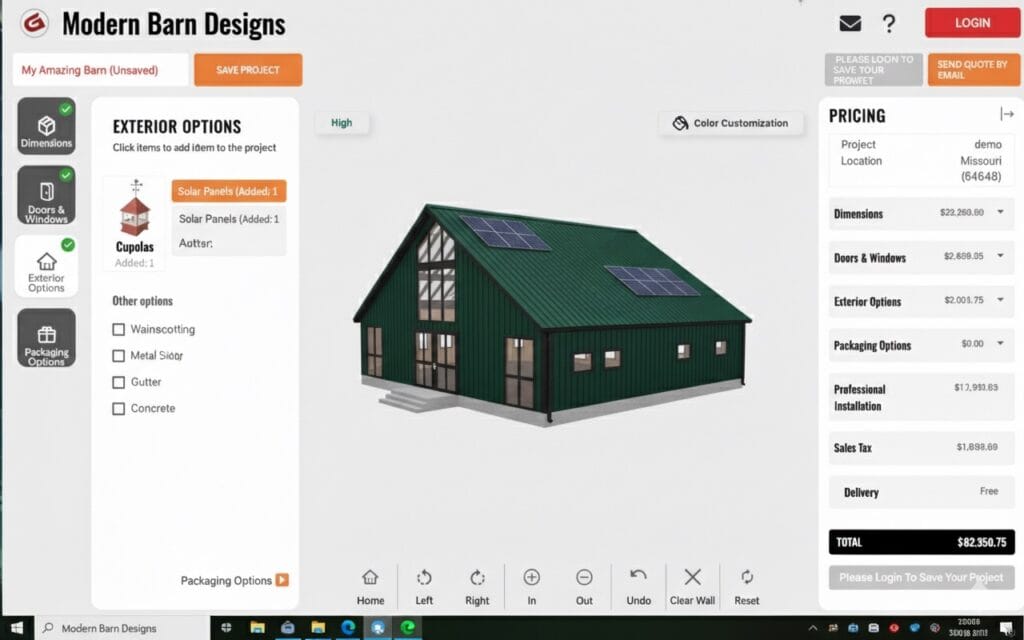
- For businesses selling configurable products

- For commercial, estimating, and project teams

- For product, brand, and ecommerce teams

- For process owners and workforce training teams
SELECTED PROJECTS
Review the work behind the capability.



ENGAGEMENT OPTIONS
Choose the starting point that matches your readiness.
Scope, schedule, pricing and acceptance terms are set in the proposal.
Discovery, production delivery and ongoing support are distinct commitments.
01 / ASSESS
Resolve the platform decision
Workflow map, requirements, options, dependencies and a recommended delivery scope.
What this stage resolves:
Proceed, validate an assumption or resolve a prerequisite.
02 / BUILD & LAUNCH
Deliver the agreed scope
Application features, integrations, test evidence, user guidance and handover plan.
What this stage resolves:
Accept for release against agreed criteria or resolve identified gaps.
03 / EXTEND & SUPPORT
Improve the live platform
Prioritised backlog, release plan, runbooks and agreed support responsibilities.
What this stage resolves:
Sequence improvements against operational risk and business value.
Example
one product family, from configuration to sales handoff
A buyer selects valid options. Required information is checked.
The configuration reaches the CRM, and sales reviews pricing exceptions before issuing a commercial quote.
01 /
Define the boundaries
Name the owner of product rules, the pricing source, the CRM fields and the response to a failed connection.
Full CPQ, ERP/BOM generation, dealer operations and additional product families require their own scope.
02 /
Agree what acceptance means
- Required information is present.
- Invalid combinations are blocked or reviewed.
- Selected options reach the sales record.
- Retries do not create duplicate records.
- Authorised staff can trace changes.
TECHNICAL & OPERATING SCOPE
Agree what must work around the application.
Systems, data and access
Define source owners, API access, identifiers, update frequency and reconciliation. Agree roles, sign-in requirements and access removal. Where APIs are unavailable, assess approved alternatives and their limitations.
Hosting, migration and release
Agree environments, deployment access, monitoring, backups and rollback. Define migration checks and user transition. Performance, offline use, regional hosting and languages follow the scoped requirements.
AI-assisted tasks
Identify steps that need AI and those that can use explicit rules. Agree source permissions, representative evaluations, human review and operating-cost controls.
Ownership and handover
Document custom-code rights, third-party licences, repositories, credentials, operating documentation and each provider’s responsibilities in the agreement.
BUYING QUESTIONS
Before you commit.
Do we need to replace our ERP or CRM?
Often the first scope can work around existing systems. We examine access, data quality and integration constraints before recommending replacement or additional software.
How long will it take, and what determines cost?
Workflows, integrations, migration, reliability requirements and review availability affect timing and cost. The proposal distinguishes a pilot from production and wider rollout. Include hosting, licences, AI usage where relevant, maintenance and future change in the budget.
Who owns the code and data?
The agreement defines custom-code rights, repository and environment access, data responsibilities and third-party licence restrictions before development begins.
Can another team maintain the platform?
Agree documentation, access, deployment instructions and knowledge transfer from the outset. Make third-party dependencies and specialist skills visible in the design.
What happens after launch?
The release plan defines the initial support period and issue handling. Ongoing service coverage and improvement capacity are separately agreed.
How long does it take to build a custom business platform?
RedEx delivers production-ready custom digital platforms in 60 to 90 days for well-defined use cases. The timeline is determined primarily by integration complexity (the number of existing systems the platform must connect to) and data readiness (whether the underlying data is clean and accessible). The 60 to 90 day timeline assumes a completed Blueprint phase, approved technical architecture, and weekly stakeholder availability for sprint reviews. Platforms requiring integration with more than four legacy systems, or data migration from fragmented sources, typically take 90 to 120 days. The Platform Assessment engagement, which takes two weeks, produces a specific timeline estimate for your use case before any development budget is committed.
What is SaaS sprawl and how does it affect digital transformation programs?
SaaS sprawl refers to the accumulation of disconnected software subscriptions that each solve a narrow problem but collectively create more complexity than they resolve. The average enterprise manages 253 SaaS applications today, with IT teams underestimating actual usage by 1.7x. The impact on digital transformation programs is structural: each SaaS tool operates on its own data model, its own update schedule, and its own integration requirements. Building a coherent digital transformation initiative on top of 253 fragmented data sources is the primary reason 70% of digital transformation programs fail. A custom digital platform replaces multiple SaaS tools with a single, AI-ready foundation built around your actual data model.
How do you ensure the platform integrates with our existing ERP, CRM, and legacy systems?
Integration architecture is designed in the Blueprint phase, before any application code is written. RedEx has production experience integrating with SAP, Oracle, Microsoft Dynamics, Salesforce, and a range of proprietary legacy systems across manufacturing, construction, and healthcare. The Unify phase of the BUILT methodology is dedicated entirely to building the data model and API layer that connects existing systems into a consistent foundation. Integration complexity is assessed and costed explicitly in the Platform Assessment, so there are no integration surprises at the end of a build.
What if our requirements change after launch?
We prioritise changes against business value, technical dependencies and operating risk. Larger changes may require additional discovery or architecture work. The scope, cost and release plan are agreed before implementation.
Bring the workflow, the systems and the constraint.
A sample enquiry, quote, approval or report helps make the discussion specific. Tell us what your team needs to do, where the process breaks down and which systems are already in place.