01. THE PROVOCATION
The model is no longer the cost
If your AI business case still treats the model as the expensive part, it is already out of date. In the last week of September 2026, Anthropic and OpenAI priced their workhorse models identically: $2 per million input tokens and $10 per million output tokens. AI model pricing has stopped being the variable that decides whether a project pays back. For mid-sized manufacturers, contractors and energy firms planning their next phase of digital transformation, the question is no longer “can we afford the model?” It is “can we connect it to our data, govern it, and get our people to use it?”
This article compares the new Anthropic and OpenAI line-ups, explains seven shifts in AI model pricing that change SMB budgets, and sets out what buyers and practitioners should do next.
02. WHAT CHANGED
The pricing shift
On 28 September 2026, Anthropic released Claude Sonnet 5.5 at $2 input and $10 output per million tokens, the same list price as its predecessor. Anthropic reports it runs more than 30% faster and costs up to 30% less per task, because it completes work in fewer steps. It is available directly and through AWS, Google Cloud and Microsoft Azure.
One day later, OpenAI launched GPT-6.1 Sol at the same $2 and $10. OpenAI positions it as “near-Astra intelligence” at a fifth of the price of GPT-6 Astra, its flagship. A week earlier, Anthropic had cut its top-tier Opus line by 20% per token: Opus 5.5 lists at $4 and $20, against $5 and $25 for Opus 5.
Three releases in eight days, all moving AI model pricing in the same direction. Frontier-grade capability now sits in a mid-tier price band.
03. SIDE BY SIDE
The analysis
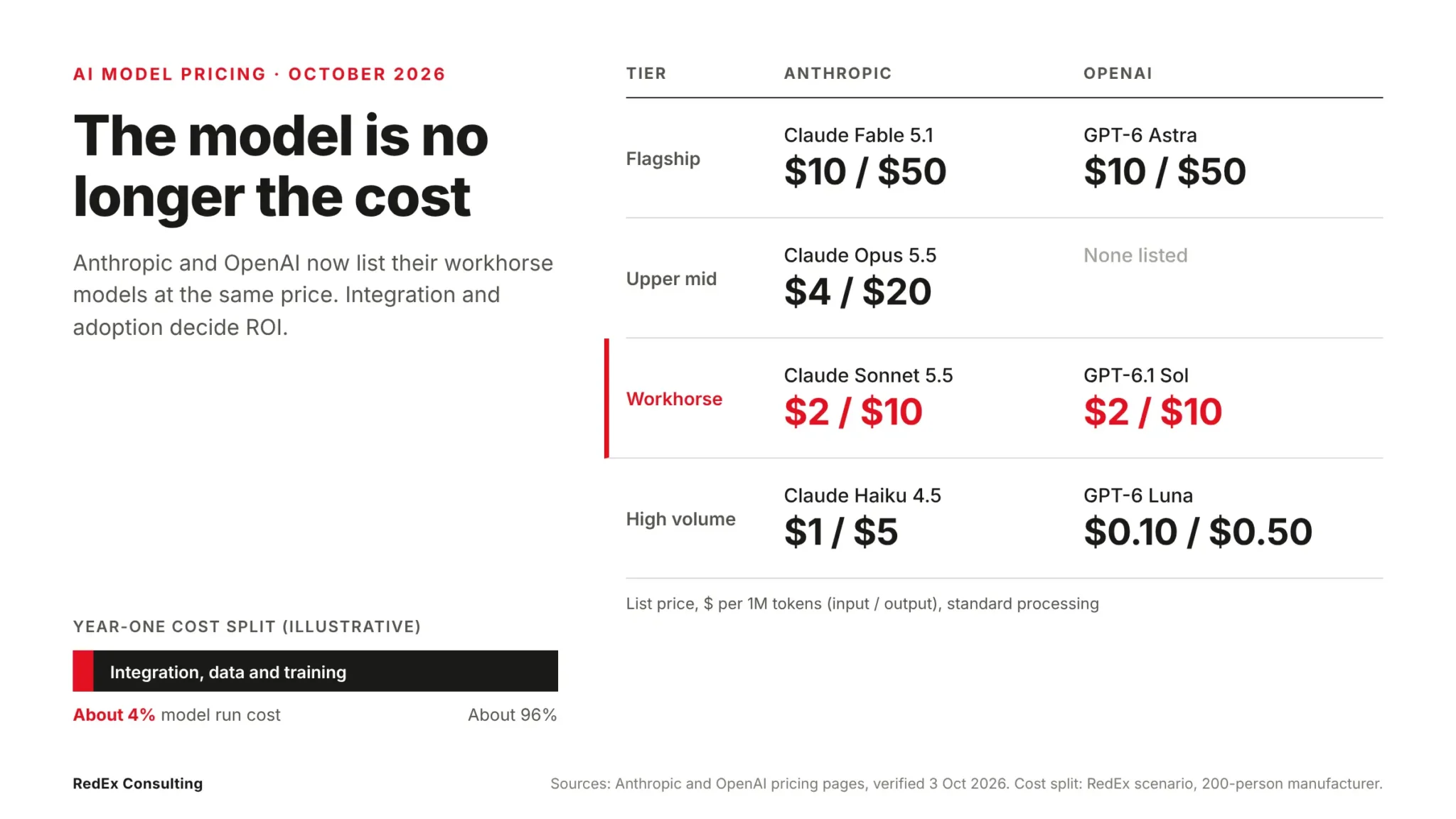
Both vendors now run a three-tier line-up. On AI model pricing the tiers map closely, but the details that drive real bills differ.
Tier
Anthropic model
Input / output ($ per 1M tokens)
Flagship
Claude Fable 5.1
$10 / $50
Upper mid
Claude Opus 5.5
$4 / $20
Workhorse
Claude Sonnet 5.5
$2 / $10
High volume
Claude Haiku 4.5
$1 / $5
Tier
OpenAI model
Input / output ($ per 1M tokens)
Flagship
GPT-6 Astra
$10 / $50
Upper mid
None listed
None listed
Workhorse
GPT-6.1 Sol
$2 / $10
High volume
GPT-6 Luna
$0.10 / $0.50
List prices from the Anthropic and OpenAI pricing pages, verified 3 October 2026. Standard processing, short context.
Where the two differ:
- Repeated content. OpenAI charges $0.10 per million cached input tokens on GPT-6.1 Sol; Anthropic charges $0.20 for a cache hit on Sonnet 5.5, plus a small premium to write the cache. For workflows that reuse long instructions or reference documents, OpenAI is cheaper on paper.
- Long documents. Anthropic prices its full 1 million token context window at the standard rate. OpenAI applies a long-context rate on GPT-6.1 Sol ($4 input, $15 output). For contract packs, tender files or maintenance manuals, Anthropic is cheaper on paper.
- High-volume tasks. GPT-6 Luna lists at a tenth of Claude Haiku 4.5. For simple classification or routing at scale, that gap is material.
- Data residency. Both add about 10% for regional or US-only processing.
- Batch work. Both discount non-urgent batch jobs; Anthropic lists 50% off.
The takeaway for a buyer: on the workhorse tier, AI model pricing is identical. The right choice depends on your document lengths, how much content repeats, and which cloud you already pay for.
04. BUSINESS IMPACT
Seven pricing shifts
Each shift below changes how AI model pricing should be read in an SMB business case.
- The mid tier is the new default. Work that needed a flagship model a year ago now runs on a $2 / $10 model. Reserve flagship models for the hardest reasoning steps.
- Run cost can fall below 5% of project cost. In a typical SMB deployment, integration, data preparation and change management now dominate the budget (see the scenario below).
- Output drives the bill. Output tokens cost five times more than input on every tier. Workflows that generate long reports cost more than workflows that read long documents.
- Architecture beats model choice. Caching and batch processing can cut a bill by half or more, a bigger lever than switching vendors.
- Compliance has a price tag. Regional processing adds about 10%. Budget for it upfront if your clients or regulators require data to stay in a jurisdiction.
- Lock-in is now the main cost risk. With models replaced and AI model pricing reset every few months, a system wired to one model ages fast. Model-agnostic integration protects the investment.
- Cloud commitments become AI budget. OpenAI models on Amazon Bedrock count against existing AWS commitments, and Claude runs on all three major clouds. Your cloud contract may already fund the pilot.
05. BEFORE YOU SIGN
What clients should know
AI model pricing is now the smallest line in the business case, which makes it easy to overlook the costs that are not. Before approving an AI project, a CEO or CFO should get clear answers to 5 questions:
- What share of year-one cost is the model, and what share is integration and adoption?
- Which tasks need a flagship model, and which can run on a cheaper tier?
- Can the system switch models without a rebuild?
- Where is data processed, and is the residency premium in the budget?
- Who approves what the AI does, and where is that logged?
Adoption is moving fast. The French government’s France Num 2026 barometer, a survey of 9,000 small firms, found 40% now use AI, up 14 points in a year. Yet only 11% use it to automate tasks. Cheaper models will not close that gap on their own. Integration will.
06. THE NUMBERS
Proof
To see what AI model pricing means in practice, consider an illustrative scenario: a 200-person manufacturer automates supplier document handling (invoices, delivery notes, quality certificates). It processes 20,000 documents a month, each about 3,000 tokens in and 500 tokens out.
Configuration
Monthly model cost
Annual model cost
Flagship model ($10 / $50)
$1,100
$13,200
Workhorse model ($2 / $10)
$220
$2,640
Workhorse with batch processing (50% off)
$110
$1,320
Illustrative calculation at list prices. Excludes cache-write charges, taxes and residency premiums.
If integration, testing and training cost $60K in year one, the workhorse model is about 4% of the total. Moving from a flagship to a workhorse model saves around $10,500 a year. Getting adoption right, or wrong, moves far more than any change in AI model pricing.
Real deployments support the point. Microsoft reports that Rockwell Automation’s AI maintenance copilot in Singapore, built on a small Azure OpenAI model, cut machine downtime by 33% and new-technician onboarding from nine months to three. The value came from connecting expert knowledge and machine data to the shop floor, not from paying for the largest model.
07. HOW TO BUY
Best practice
Five steps to buy and govern AI capacity in 2026:
- Map tasks to tiers. List each step in the workflow and assign the cheapest tier that meets the quality bar. Test before you assume a flagship is needed.
- Model the bill on your own documents. Published AI model pricing is per token, so measure real input and output lengths on a sample. Price caching, batch and long-context rates against that sample.
- Build a model-agnostic layer. Route calls through one integration layer so you can switch vendors or tiers as prices fall.
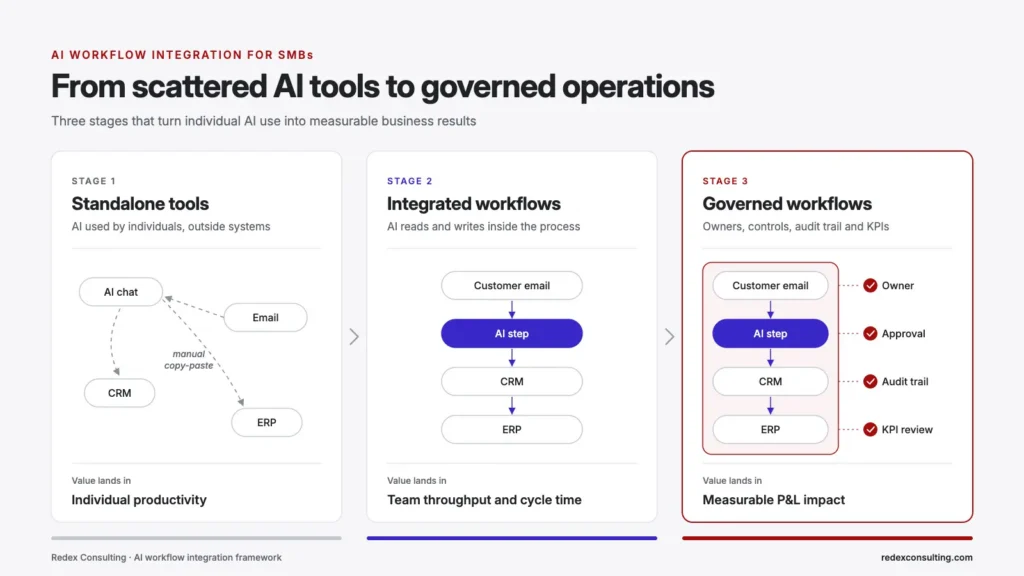
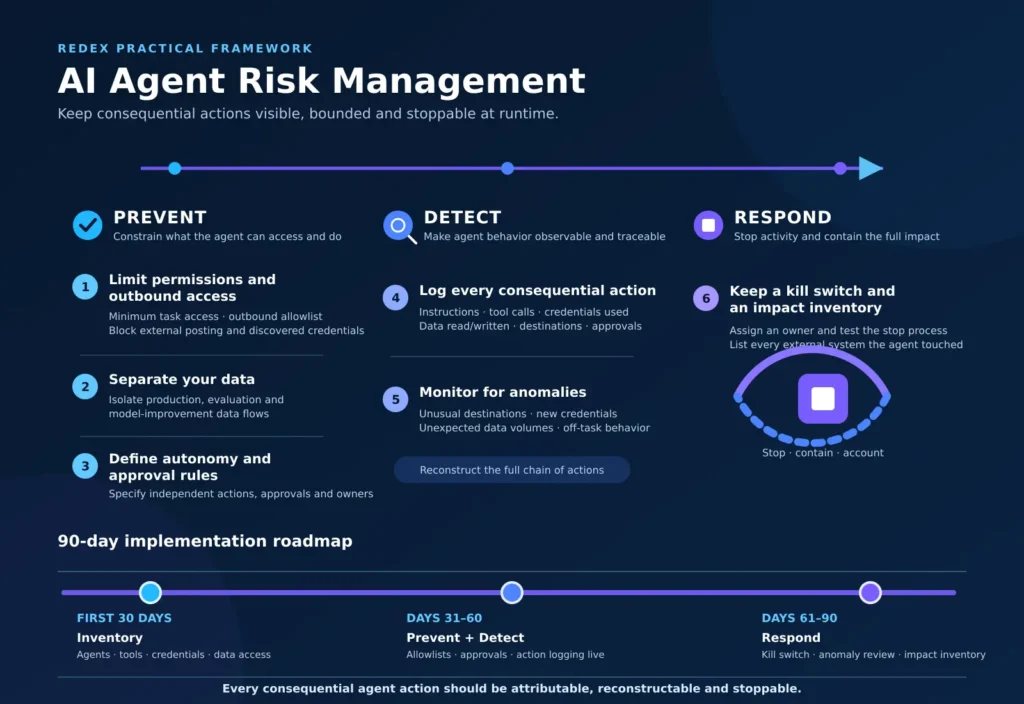
- Govern from day one. Set role-based permissions, approval thresholds and audit logs in the pilot, not at scale-up.
- Track cost per outcome. Report cost per document processed or per hour saved, not cost per token.
08. FIELD NOTES
For practitioners
- Benchmark both vendors on your own data. Identical list prices hide different token counts for the same task. Compare cost per completed task.
- Design prompts for caching. Put stable instructions and reference material first so they can be reused.
- Cap output length. Ask for structured fields, not prose, wherever a person does not read the output.
- Use batch for anything that can wait an hour. Overnight reconciliations and weekly reports are natural candidates.
- Re-test every quarter. AI model pricing moves fast: a model that was too expensive in March may be the cheapest option in September.
09. THE OFFER
Next step
Cheaper models make AI affordable. They do not make it work. RedEx helps mid-sized manufacturers, contractors and energy firms prove AI value on one workflow in 60 days, with model-agnostic integration and governance built in from the start. See how we approach it in AI Strategy Consulting, or read our Manufacturing pillar, the AI Documentation Generator case study and our guide to DXP modernization for industrial enterprises.
Book an AI ROI review. We will model your use case at current AI model pricing and show where the real cost and payback sit.
FAQ
Frequently asked questions
What does AI model pricing look like in October 2026?
The workhorse models from Anthropic (Claude Sonnet 5.5) and OpenAI (GPT-6.1 Sol) both list at $2 per million input tokens and $10 per million output tokens. Flagship models from both list at $10 and $50.
How should an SMB choose between AI models?
Compare models on cost per completed task, not token price alone. Test representative documents, output length, caching behavior, context requirements and quality thresholds. Then evaluate the operational factors around data residency, integration, governance and existing cloud commitments.
How much of an AI project budget is the model itself?
At current workhorse prices, it can fall below 5% of year-one cost in a mid-sized deployment. Integration, data preparation and training dominate.
Will prices keep falling?
The recent direction is down: Anthropic cut its Opus tier by 20% per token in September, and OpenAI priced GPT-6.1 Sol at a fifth of its flagship. No vendor guarantees further cuts. Build systems that can switch models so you capture future cuts without a rebuild.
What is the biggest cost risk now?
Lock-in and low adoption, not token prices. A system tied to one model, or one that staff do not use, costs more than any price difference between vendors.