$411B
Global managed services market by 2025
Grand View Research
76%
Of tech employers can't find the right IT skills
Grand View Research
25-45%
IT cost reduction through managed services
Deloitte
83%
Plan to accelerate AI & automation in next 2 years
KPMG
Foundation
Managed IT Services for Enterprise
Next-Generation Operations That Protect Your Digital Transformation Investments
Every digital transformation has 2 phases: the implementation and the operation. Most organizations plan meticulously for the first and underfund the second. The platforms built during transformation require specialized expertise to run, secure, and evolve. The talent shortage makes hiring that expertise internally the slowest and most expensive option available.
Why traditional IT operations are breaking
Managed Services as the Operational Layer of Digital Transformation: Why the Old Model Cannot Keep Pace
The old model (hire, train, retain, repeat) can’t keep pace with the complexity of modern technology stacks. Cloud sprawl, security threats, AI operational debt, and a global talent crisis are forcing organizations to rethink how they run IT.
Speed #1
Speed to market now the top priority (cost savings ranked 5th)
The buying criteria for managed services have fundamentally shifted. Organizations prioritize velocity and innovation over cost arbitrage.
KPMG, 2025
76%
Of tech employers struggle to find the right IT skills
The global talent shortage is acute in technology. Companies are competing for a shrinking pool of specialized engineers, architects, and DevOps professionals.
KPMG, 2025
9 in 10
Executives demand next-generation service providers
Legacy outsourcing is dead. Executives want providers who bring AI-augmented delivery, outcome-based pricing, and continuous innovation, not just cheaper labor.
KPMG, 2025
55%→37%
Traditional outsourcing declining; software-based delivery doubling
Traditional labor-based outsourcing is forecast to fall from 55% to 37% of delivery. Software-based delivery will double from 14% to 30%.
KPMG, 2025
The managed services market is going through its own digital transformation: from labor-based delivery to AI-augmented operations. Traditional outsourcing is forecast to fall from 55% to 37% of delivery. Software-based delivery will double. The organizations that partner with next-generation providers today will operate their platforms at a structural cost and quality advantage over those that remain with legacy vendors.
The Opportunity
Next-generation managed services deliver more than cost savings
How AIOps Protects Digital Transformation Investments After Go-Live
$878B
Managed services market by 2032
Fortune Business Insights
80%
Reduction in mean time to resolution with AIOps-augmented operations
Industry Benchmark
30%
Cost reduction with predictable IT investments
Our approach
How RedEx Delivers Next-Generation Managed IT Services: AIOps-First, Outcome-Based, Built to Evolve
UPTIME SLA
RESPONSE TIME
Cloud Savings
According to KPMG, 9 in 10 executives believe managed services must come from next-generation providers instead of legacy firms. We agree. Our managed services combine deep domain expertise with AI-augmented operations where it makes sense. We manage across major cloud platforms, application stacks, and security frameworks, ensure your digital backbone is resilient, secure, and always on.
24/7/365 Monitoring (NOC/SOC)
Site Reliability Engineering (SRE)
Level 1 Helpdesk Support
Microsoft SharePoint & Sites Management
L2/L3 Application Support
Infrastructure Maintenance & Monitoring
Cloud Cost Optimization (FinOps)
01
Proactive, Not Reactive
AIOps-driven monitoring predicts and prevents incidents before they impact your business. We fix problems you didn’t know you had.
02
Outcome-Based
We measure success by business outcomes: uptime, performance, cost efficiency and the number of tickets closed.
03
Continuous Improvement
Monthly service reviews, quarterly roadmaps, and annual technology assessments ensure your operations get better every quarter.

- PREMIUM Case Study
How We Help
Managed IT Services: From 24/7 NOC to AIOps-Driven Digital Transformation Operations
No more 3AM wakeup call. We monitor, manage, and continuously optimize your system so you can rest.
24/7 Application Monitoring & Support
Every hour of unplanned downtime on a business-critical platform costs more than the monthly managed services fee that would have prevented it. RedEx's 24/7 NOC monitors your applications with AIOps-driven alerting that distinguishes real incidents from noise before a human ever sees a ticket.
Cloud Infrastructure Management
End-to-end management of your cloud environments across AWS, Azure, and GCP. Cost optimization, security hardening, auto-scaling, and compliance monitoring built into every engagement.
AIOps & Intelligent Automation
AI-powered operations that predict incidents before they happen. Automated root cause analysis, self-healing workflows, and intelligent ticket routing that reduces noise by 70%+.
Platform Lifecycle Management
The platforms your business depends on are also the platforms most likely to be compromised through unpatched vulnerabilities or destabilised by major version upgrades that were never tested in staging. RedEx manages the full platform lifecycle so your CMS, DXP, CRM, and ERP stay current, secure, and performant without requiring your internal team to own the risk.
Service Desk & End-User Support
AI-augmented service desk with human escalation. First-contact resolution rates that exceed industry benchmarks through knowledge management, automation, and continuous learning.
End-to-End Capabilities
Complete consulting & implementation services
From AI strategy for operations leaders to through full-scaled platform delivery, we bring the full spectrum of skills needed to transform.
Operations in Action
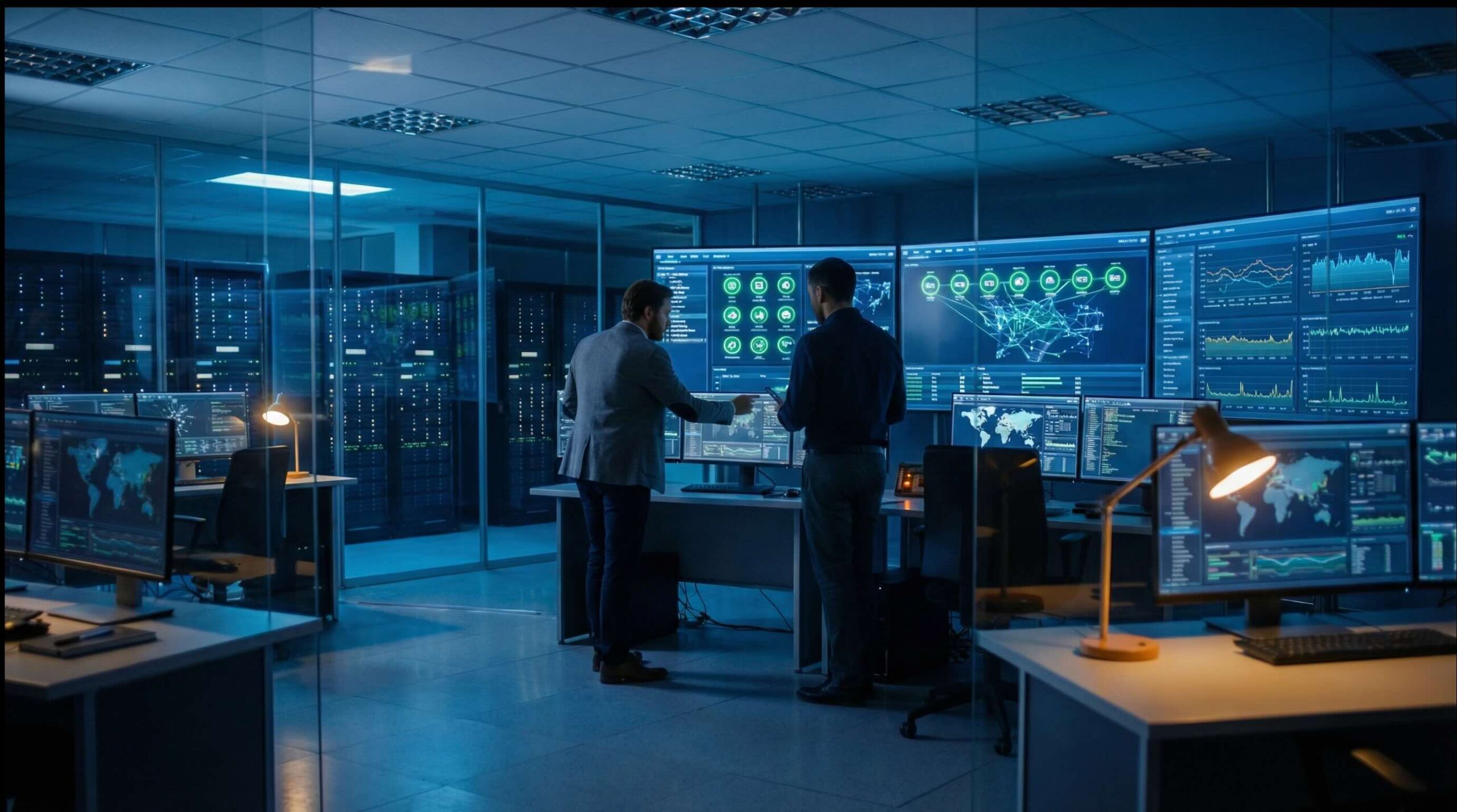
We keep the lights on
Proactive monitoring, automated remediation, continuous optimization and quarterly roadmaps.
Value Drivers
Why Next-Generation Managed IT Services Outperform In-House & Legacy Outsourcing
Cost Predictability
Replace unpredictable break-fix costs with predictable monthly investments. Our managed services model eliminates surprise expenses while delivering higher service quality than in-house teams.
- 25–45% reduction in IT operational costs
Uptime & Reliability
SLA-backed availability with proactive monitoring and automated remediation. AIOps and predictive analytics catch issues before they impact your business.
Talent Access at Scale
Instant access to specialized expertise across cloud, security, data, and application domains. No recruiting delays, no retention risk, no knowledge gaps when key people leave.
- Bypass the 76% talent shortage gap
AI-Augmented Operations
Every engagement is enhanced with AIOps, automated runbooks, and intelligent monitoring. We continuously invest in AI capabilities so your operations get smarter over time.
- 70%+ reduction in alert noise through AI correlation
Service Evolution Tiers
Where Does Your Organisation Fit?
Not every organization needs the same level of managed services. We meet you where you are and evolve your operations over time from reactive support to autonomous, AI-powered operations.
FOUNDATION
Stabilize & Monitor
24/7 monitoring, incident management, and basic automation. Establish SLAs, build the knowledge base, and create a stable operational baseline. Ideal for organizations transitioning from in-house or legacy providers.
Infrastructure monitoring, L1/L2 support, patch management
Intelligent
Automate & Optimize
AIOps-driven operations with predictive alerting, automated remediation, and continuous optimization. The sweet spot for most enterprises, significant cost reduction with measurably better outcomes.
AIOps, self-healing, performance optimization, SecOps
autonomous
Self-Healing & Self-Optimizing
AI-powered operations that predict, prevent, and resolve issues with minimal human intervention. Continuous learning loops, automated scaling, and outcome-based commercial models.
Predictive operations, auto-scaling, outcome-based SLAs
Proof of Impact
Managed services across the enterprise

The GUARD Method
How RedEx Manages Managed IT Services as the Operational Layer of Your Digital Transformation Program
G
Govern
Weeks 1-2
Define service levels, KPIs, escalation paths, and governance frameworks before operations begin. The governance design determines whether the engagement is accountable to business outcomes or just to ticket counts.
Output
A signed SLA document, a governance framework, and a joint operating model that defines who owns what on both sides of the engagement.
U
UNCOVER
Weeks 3-4
Deep-dive into your technology landscape, operational workflows, and tribal knowledge. We document everything: architecture, dependencies, known issues, and the undocumented fixes your outgoing team never wrote down.
Output
A complete platform documentation package, a known-issues registry, and a risk-ranked remediation backlog before we take operational responsibility for anything.
A
Automate
Weeks 5-10
Deploy AIOps, automated runbooks, self-healing scripts, and intelligent monitoring. Reduce manual toil by 60%+ in the first 90 days through systematic automation of the known issue patterns identified in UNCOVER.
Output
An automation library with documented runbooks, a 60%+ reduction in manual incident handling, and a monthly report tracking automation coverage against the remediation backlog.
R
Run
Ongoing
Operate your systems with 24/7 monitoring, proactive incident management, and continuous optimisation. Our NOC becomes an extension of your team: same escalation paths, same communication tools, same accountability for the digital transformation investments your board approved.
Output
monthly service reports mapped to business KPIs, not technical metrics. Your board should be able to read the report without an IT glossary.
D
Drive
Ongoing
Continuous improvement through monthly service reviews, quarterly roadmaps, and annual technology assessments. Every quarter the operation gets measurably better: more automated, more proactive, lower cost per resolution.
Output
A quarterly improvement roadmap with committed targets for the next 90 days, reviewed and signed off by your technology leadership.
Tech Agnostic
We manage across your entire technology stack
Every technology recommendation in a RedEx AI strategy engagement is validated against your specific constraints, not against a preferred vendor relationship.
We make IT simple for you.
Your technology ecosystem is huge, and it should be. We manage across all major platforms, tools, and frameworks, ensure your digital backbone is resilient, secure, and always on.
- Cloud Platforms: AWS, Azure, GCP, multi-cloud and hybrid environments
- Application Stacks: Adobe AEM, Sitecore, Salesforce, SAP, custom applications
- Security Frameworks: Splunk, CrowdStrike, Palo Alto, Microsoft Sentinel, custom SIEM
- Observability: Datadog, New Relic, Dynatrace, Grafana, Prometheus
Service Models We Deliver
Dedicated Team
Embedded operations team aligned to your business hours, culture, and processes
Shared Services
Cost-effective shared NOC and SOC resources with guaranteed SLAs
Hybrid Model
Dedicated leads with shared specialist pools for peak coverage and expertise
Ticket-Based
Commercial model tied to outcomes.
For Every Scale
Engagement Models
Not sure which model fits?
Book a 30-minute Platform Assessment and we will assess your current operations and recommend the right starting point. Most organisations start at FOUNDATION and progress to INTELLIGENT within 6 to 12 months.
FOUNDATION Managed Services
Best for:
Organisations that have just completed a digital transformation program and need stable, documented, 24/7 managed operations as their baseline. Also the right model for organisations transitioning from an in-house team or a previous managed services provider.
What it includes:
- Infrastructure monitoring
- L1/L2 support
- patch management
- incident management
- a documented UNCOVER phase that maps every platform dependency before RedEx takes operational responsibility
INTELLIGENT Managed Services
Best for:
Organisations that have outgrown reactive support and need AIOps-driven operations with predictive alerting, automated remediation, and continuous cost optimisation. The sweet spot for most enterprise managed services engagements.
What it includes:
- Everything in FOUNDATION
- AIOps deployment
- self-healing runbooks
- SecOps integration
- performance optimisation
- Cloud FinOps
- monthly service reviews
AUTONOMOUS Managed Services
Best for:
Organisations with mature digital platforms seeking AI-powered operations that predict, prevent, and resolve issues with minimal human intervention. Commercial model tied to business outcomes, not ticket volume.
What it includes:
- Everything in INTELLIGENT
- predictive operations
- auto-scaling
- outcome-based SLAs
- continuous learning loops
- quarterly technology assessments
FAQs
What is the difference between traditional IT outsourcing and next-generation managed services?
Traditional IT outsourcing is a labour arbitrage model: a provider supplies engineers at a lower cost than hiring directly, delivering services against a defined scope with reactive incident management and ticket-based accountability. Next-generation managed services is an outcomes model: the provider takes responsibility for the performance of your technology operations, brings AI-augmented tooling that improves resolution times and reduces incident frequency, and operates on outcome-based SLAs rather than effort-based ones. KPMG’s 2025 analysis found that 9 in 10 executives now demand next-generation providers because the labour arbitrage model cannot keep pace with the complexity of modern technology stacks, the speed expectations of digital businesses, or the security threat landscape that has emerged since 2022. RedEx operates exclusively on the next-generation model: every engagement includes AIOps deployment, automated remediation, and quarterly improvement roadmaps with committed targets.
What is AIOps and how does it reduce IT operational costs?
AIOps (AI for IT Operations) refers to the application of machine learning and AI to IT operations data: monitoring alerts, log files, incident records, and performance metrics. The primary value is noise reduction and predictive capability. Modern enterprise IT environments generate thousands of monitoring alerts per day, most of which are duplicates, false positives, or low-severity events that do not require human intervention. AIOps correlates these alerts, suppresses the noise, and surfaces only the signals that require action, reducing alert volume by 70% or more. The secondary value is prediction: AIOps models trained on historical incident data can identify the pattern signatures that precede known incident types and trigger automated remediation before the incident impacts users. In practice, organisations implementing AIOps-driven managed services see 25 to 45% reductions in IT operational costs within 12 months, primarily through reduced manual handling time and fewer escalations to senior engineers.
How quickly can a managed services provider take over an existing platform?
RedEx can take emergency operational responsibility for a platform within 72 hours when the situation requires it, as demonstrated in the EventBooking case study where we inherited a live marketplace app from a departing vendor and stabilised it within the first week. A planned, structured handover following the GUARD methodology typically takes 4 to 6 weeks: 2 weeks for the UNCOVER phase in which we document the full platform estate and build the knowledge base, and 2 to 4 weeks for the AUTOMATE phase in which we deploy AIOps monitoring and build the initial runbook library before taking full operational responsibility. The UNCOVER phase is non-negotiable: inheriting a platform without fully understanding its dependencies and known issues is the primary cause of managed services engagements that start badly and never recover.
What role does managed services play in sustaining a digital transformation program after deployment?
Most digital transformation programs are designed and budgeted for the build phase. The operational phase, the three to five years of running, optimising, and evolving the platforms that were built, is frequently underfunded, understaffed, and underplanned. The consequence is that platforms delivered on time and on budget begin degrading within 12 to 18 months because the internal team responsible for operating them does not have the specialised skills, tooling, or capacity to keep pace with security updates, performance optimisation, and platform evolution. RedEx managed services is designed specifically for this transition: we take operational ownership of the platforms your digital transformation program delivered, manage the ongoing technical debt, and ensure the investments your board made in transformation continue to compound in value rather than decay.
What happens when something goes seriously wrong on a platform RedEx manages?
Every RedEx managed services engagement has a documented major incident response protocol defined in the GOVERN phase before operations begin. For critical incidents affecting production systems, the response sequence is: automated detection and initial triage within 5 minutes, first human contact from a senior engineer within 15 minutes, executive communication to your designated contact within 30 minutes, and a post-incident review delivered within 24 hours of resolution documenting root cause, timeline, and remediation actions. The accountability framework is part of the SLA: if RedEx fails to meet committed response times, the commercial model includes service credit provisions. We do not manage incidents. We manage the relationship between your board and your technology risk. That requires a different level of transparency and accountability than traditional managed services provides.
Ready to transform your IT operations?
Digital transformation does not end at launch. It begins there. The organizations that sustain their transformation are the ones that ensure it is operated, secured, and improved every day after go-live.