01. EXECUTIVE SUMMARY
The $1.6 Trillion Problem: Why Construction Needs AI-BIM Integration
The construction industry is facing a productivity crisis that only AI-BIM integration can solve at scale. While manufacturing productivity grew 90% between 2000 and 2022, construction managed just 10% over the same period. In the United States, construction productivity actually declined by 2% annually. Meanwhile, 98% of large projects experience cost overruns or delays, and the global construction spending pipeline is projected to grow from $13 trillion to $22 trillion by 2040.
AI-BIM integration represents the most significant opportunity to close this productivity gap. Building Information Modeling provides the digital foundation, a structured, data-rich 3D representation of every building element. Artificial intelligence provides the analytical engine, the ability to extract patterns, predict outcomes, and automate decisions from that data. Together, they transform static digital models into intelligent construction systems.
According to McKinsey, the construction industry must fundamentally transform its productivity trajectory to meet the $22 trillion demand pipeline. The global BIM market is projected to grow from $9 billion in 2025 to over $15 billion by 2030 and AI integration is the primary growth driver.
This guide provides a structured approach to AI-BIM integration for construction SMBs covering architecture, high-impact use cases, implementation phases, and measurable ROI. For the broader industry context, see our AI in construction industry page.
10%
Construction productivity growth in 20 years
$15B
Global BIM market by 2030
30%
Rework reduction with AI-BIM
Faster cost estimation
02. Definition
What AI-BIM Integration Means for Construction SMBs
Most construction firms use BIM as a visualization tool: a better version of 2D drawings. That captures perhaps 10% of BIM’s potential value. While most firms use BIM for visualization, true AI-BIM integration unlocks the remaining 90% of value by adding intelligence layers to the geometric model.
Analytical Intelligence
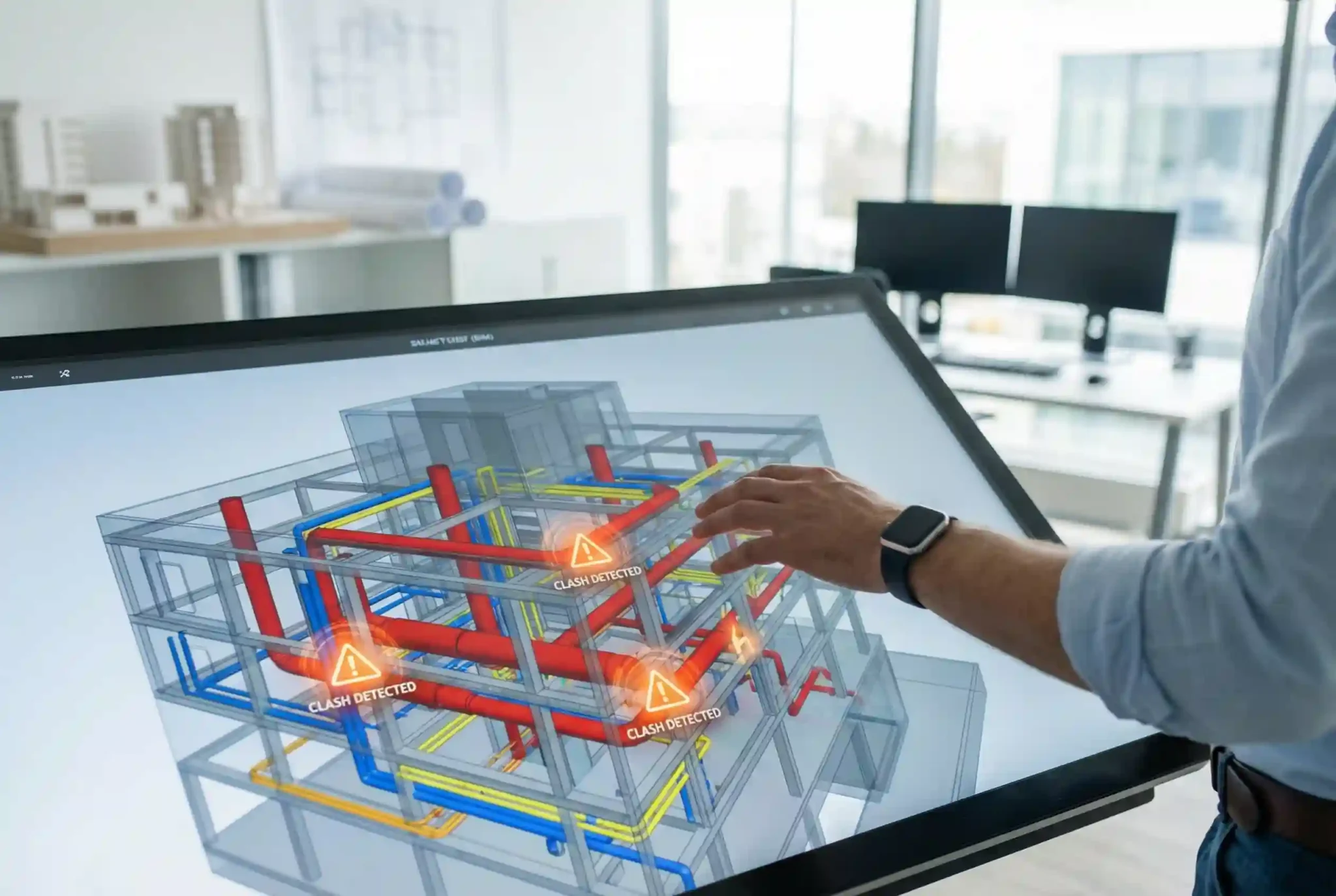
AI reads the BIM model to extract patterns, identify conflicts, and generate insights that would take human reviewers days or weeks to discover. Automated clash detection, code compliance checking, and constructability analysis happen in minutes, not months.
Predictive Intelligence
AI uses historical project data combined with current BIM parameters to forecast outcomes (cost overruns, schedule delays, safety risks, and resource bottlenecks) before they materialize. The shift from reactive to proactive project management.
Generative Intelligence
AI generates design alternatives, optimizes building systems, and proposes construction sequences based on project constraints. Instead of evaluating 3 design options manually, AI evaluates 3,000 and recommends the optimal solution.
"BIM without AI is a digital filing cabinet. AI without BIM is an engine without fuel. Together, they create an intelligent construction system that learns, predicts, and optimizes."
For a deeper understanding of where AI amplifies human capabilities versus where it falls short, see our analysis of the Jagged Frontier framework, a critical concept for construction firms deciding which BIM workflows to automate first.
03. The Approach
The AI-BIM Integration & Intelligence Maturity Model
Most AI-BIM integration projects fail because firms attempt to deploy advanced capabilities before establishing foundational data quality. The Redex BIM Intelligence Maturity Model structures the journey across four phases, each building on the previous one. Skipping phases is the primary reason AI-BIM projects underdeliver.
The Redex BIM Intelligence Maturity Model
Digital Foundation
Layer 01
- BIM Execution Plan with LOD standards (LOD 300+ for AI readiness)
- Cloud-based model management with version control and access permissions
- Standardized naming conventions, classification systems (UniFormat/MasterFormat)
- Data quality baseline: model completeness, accuracy, and consistency metrics
Automated Analysis
Layer 02
- AI-powered clash detection across all disciplines (architectural, structural, MEP)
- Automated quantity takeoff and cost estimation from BIM geometry
- Rule-based code compliance checking against local building codes
- Automated report generation: clash reports, quantity schedules, cost summaries
Predictive Intelligence
Layer 03
- 4D/5D BIM with AI-optimized scheduling and real-time cost tracking
- Predictive delay forecasting using weather, supply chain, and labor data
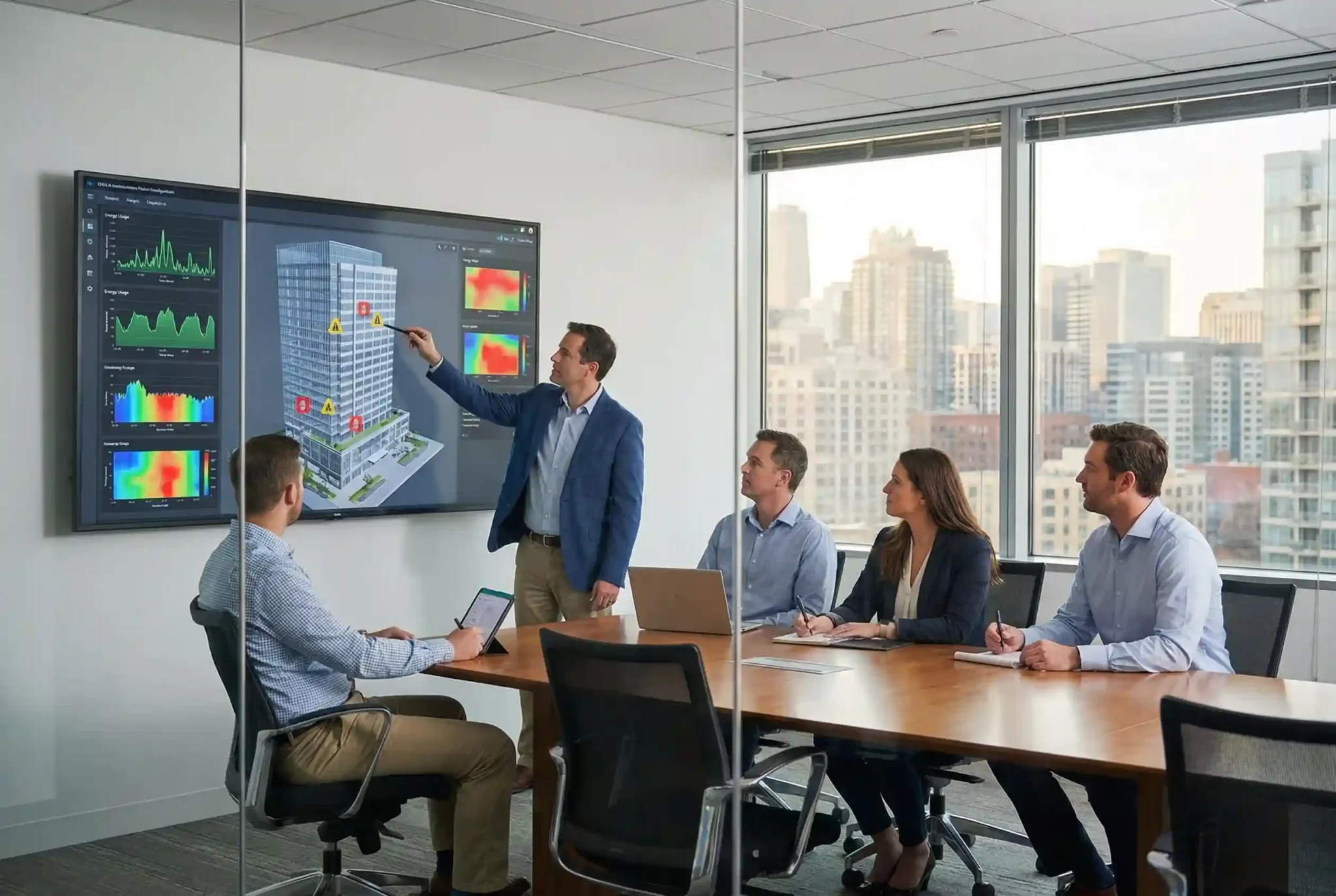
- AI-powered progress monitoring with drone surveys and IoT sensor integration
- Risk scoring models that prioritize mitigation actions by impact and probability
Autonomous Operations
Layer 04
- Digital twin deployment for facility management and building operations
- Predictive maintenance scheduling from BIM asset data and sensor analytics
- Energy optimization engine with real-time building performance tuning
- Lifecycle cost modeling with 10–20 year capital planning forecasts
Redex Point of View
The biggest mistake construction SMBs make is jumping to Phase 3 capabilities before completing Phase 1. We consistently see firms invest in predictive analytics tools while their BIM models lack consistent naming conventions, proper LOD standards, or even basic clash detection workflows. The Redex BIM Intelligence Maturity Model ensures each phase delivers measurable ROI before advancing to the next.
For a detailed look at all Redex proprietary methodologies, visit our Frameworks page.
04. AI Use Cases
High-Impact AI-BIM Integration Use Cases for Construction SMBs
These are production-ready AI-BIM integration workflows that construction SMBs deploy today to reduce costs, compress schedules, and win more bids. Each use case maps directly to a phase of the BIM Intelligence Maturity Model.
AI-Powered Clash Detection and Resolution
Automated identification and resolution of MEP, structural, and architectural conflicts before they reach the field reducing rework costs by 10–30%.
90% fewer undetected clashes
Automated MEP Clash Identification
AI scans the full BIM model across all disciplines simultaneously, identifying spatial conflicts between HVAC ducts, plumbing, electrical conduits, and structural elements that rule-based systems miss. Machine learning models trained on historical clash data prioritize critical conflicts over minor ones.
60% faster clash resolution
Resolution Recommendation Engine
Instead of just flagging problems, AI suggests specific resolution paths (rerouting a duct, adjusting pipe elevation, or modifying structural openings) based on patterns from thousands of previously resolved clashes across similar project types.
40% reduction in RFIs
Cross-Discipline Coordination
AI identifies coordination gaps between architectural, structural, and MEP models before they generate Requests for Information. For a mid-sized commercial project, this typically eliminates 30–50 RFIs that would each cost $500–$2,000 in delay and rework.
Catch issues 3–4 weeks earlier
Predictive Conflict Analysis
AI analyzes design progression patterns to predict where future clashes are likely to occur based on incomplete model areas, allowing teams to address potential conflicts before they materialize in the final design.
AI-Enhanced Cost Estimation from BIM Data
Automated quantity takeoffs, real-time cost modeling, and predictive budget analysis that reduces estimation time by 60–80% while improving accuracy.
80% reduction in takeoff time
Automated Quantity Takeoff
AI extracts material quantities directly from BIM models, concrete volumes, steel tonnage, linear feet of piping, square footage of finishes with accuracy rates exceeding 95%. What takes an estimator 2–3 days manually is completed in hours.
15–25% more accurate estimates
Real-Time Cost Modeling
AI connects BIM quantities to live material pricing databases, labor rate indices, and regional cost factors. As the design evolves, cost estimates update automatically eliminating the lag between design changes and budget impact analysis.
Compare against 500+ past projects
Historical Benchmark Analysis
AI compares current project parameters (size, type, location, complexity) against a database of completed projects to flag cost outliers and validate estimates. A warehouse estimate that is 30% above benchmark triggers an automatic review.
Reduce change order disputes by 40%
Change Order Impact Prediction
When design modifications occur, AI instantly calculates the full cost impact across all affected trades, not just the direct change, but cascading effects on adjacent systems, schedule, and labor allocation.
Predictive Scheduling and Delay Forecasting
AI-driven schedule optimization that connects BIM geometry to construction sequences, predicting delays before they happen and optimizing resource allocation.
10–20% schedule compression
4D BIM Schedule Optimization
AI analyzes BIM geometry, spatial relationships, and trade dependencies to generate optimized construction sequences. It identifies opportunities for parallel work that human schedulers miss such as interior rough-in starting on lower floors while structural work continues above.
2–3 weeks advance warning on delays
Weather and Supply Chain Risk Modeling
AI integrates weather forecasts, material lead time data, and supplier reliability scores with the project schedule. When a concrete pour is scheduled during a predicted cold snap, or a steel delivery is at risk due to supplier backlog, the system alerts the team weeks in advance.
Real-time schedule variance tracking
Progress Monitoring vs. BIM Baseline
AI compares actual construction progress (from drone surveys, IoT sensors, or manual updates) against the BIM-based schedule baseline, automatically calculating earned value metrics and forecasting completion dates.
15% improvement in labor utilization
Resource Leveling and Crew Optimization
AI balances crew assignments across project phases to minimize idle time and overtime. For a $10M project, this typically saves $150,000–$300,000 in labor costs by eliminating the peaks and valleys of traditional scheduling.
Digital Twins for Facility Management
Extending BIM beyond construction into operations: AI-powered digital twins that optimize building performance, predict maintenance needs, and reduce operating costs.
25–40% reduction in maintenance costs
Predictive Maintenance Scheduling
AI analyzes sensor data from HVAC, electrical, and plumbing systems against the BIM model to predict equipment failures before they occur. A chiller showing early vibration anomalies triggers a maintenance order weeks before a breakdown that would cost $50,000+ in emergency repairs.
15–30% energy cost reduction
Energy Performance Optimization
AI continuously optimizes building systems based on occupancy patterns, weather data, and energy pricing. The digital twin simulates different HVAC configurations and lighting schedules, implementing the most efficient combination automatically.
20% improvement in space efficiency
Space Utilization Intelligence
AI tracks occupancy patterns across the building, identifying underutilized areas and recommending layout changes. For a 50,000 sq ft office, this can eliminate the need for a $2M expansion by optimizing existing space.
Accurate 10–20 year cost projections
Lifecycle Cost Forecasting
AI combines BIM asset data with historical maintenance records and manufacturer specifications to forecast replacement timelines and costs for every building component from roof membranes to elevator motors.
AI-BIM Safety Monitoring and Compliance
Proactive safety management that combines BIM spatial data with AI analysis to prevent incidents before they occur and automate compliance documentation.
50% reduction in safety incidents
Hazard Zone Identification
AI analyzes the BIM model to identify high-risk zones (areas with overhead work, confined spaces, high-voltage proximity, or fall hazards) and generates safety plans specific to each construction phase. Workers receive zone-specific safety briefings automatically.
Continuous compliance verification
Real-Time Site Monitoring
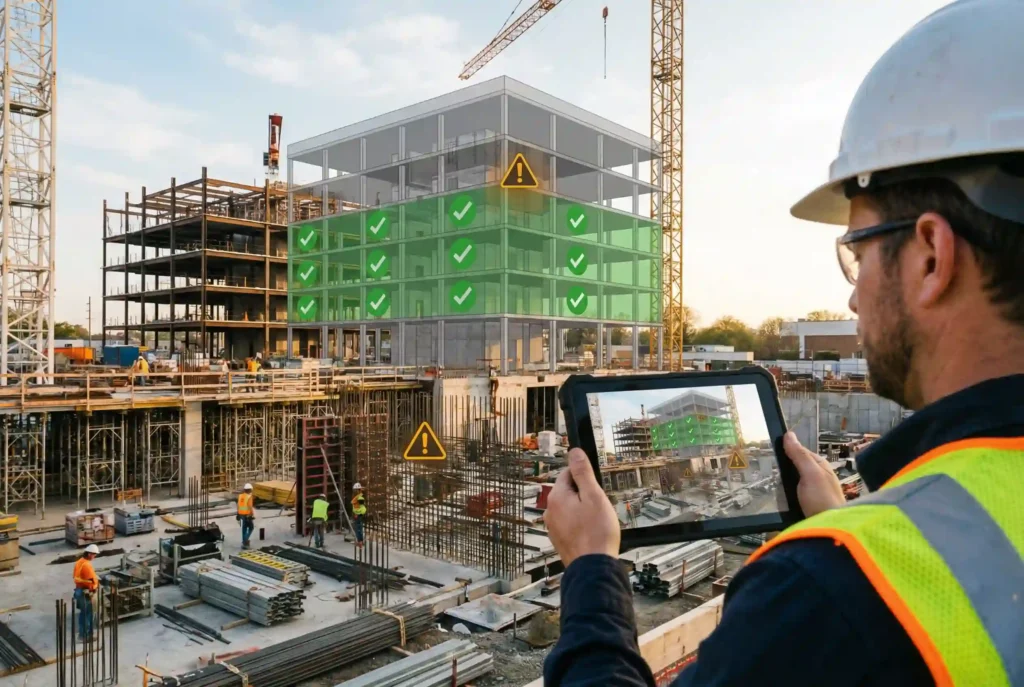
AI processes camera feeds and IoT sensor data against BIM-defined safety zones. When a worker enters a restricted area without proper PPE, or when scaffolding loads exceed design limits, the system triggers immediate alerts to site supervisors.
70% reduction in compliance paperwork
Automated Safety Documentation
AI generates OSHA-compliant safety reports, toolbox talk documentation, and incident logs from BIM data and site monitoring systems. What takes a safety manager 10+ hours per week is automated to under 3 hours.
Anticipate incidents 1–2 weeks ahead
Predictive Risk Scoring
AI assigns risk scores to upcoming construction activities based on historical incident data, weather conditions, crew experience levels, and spatial complexity from the BIM model. High-risk activities trigger additional safety measures automatically.
Redex Point of View
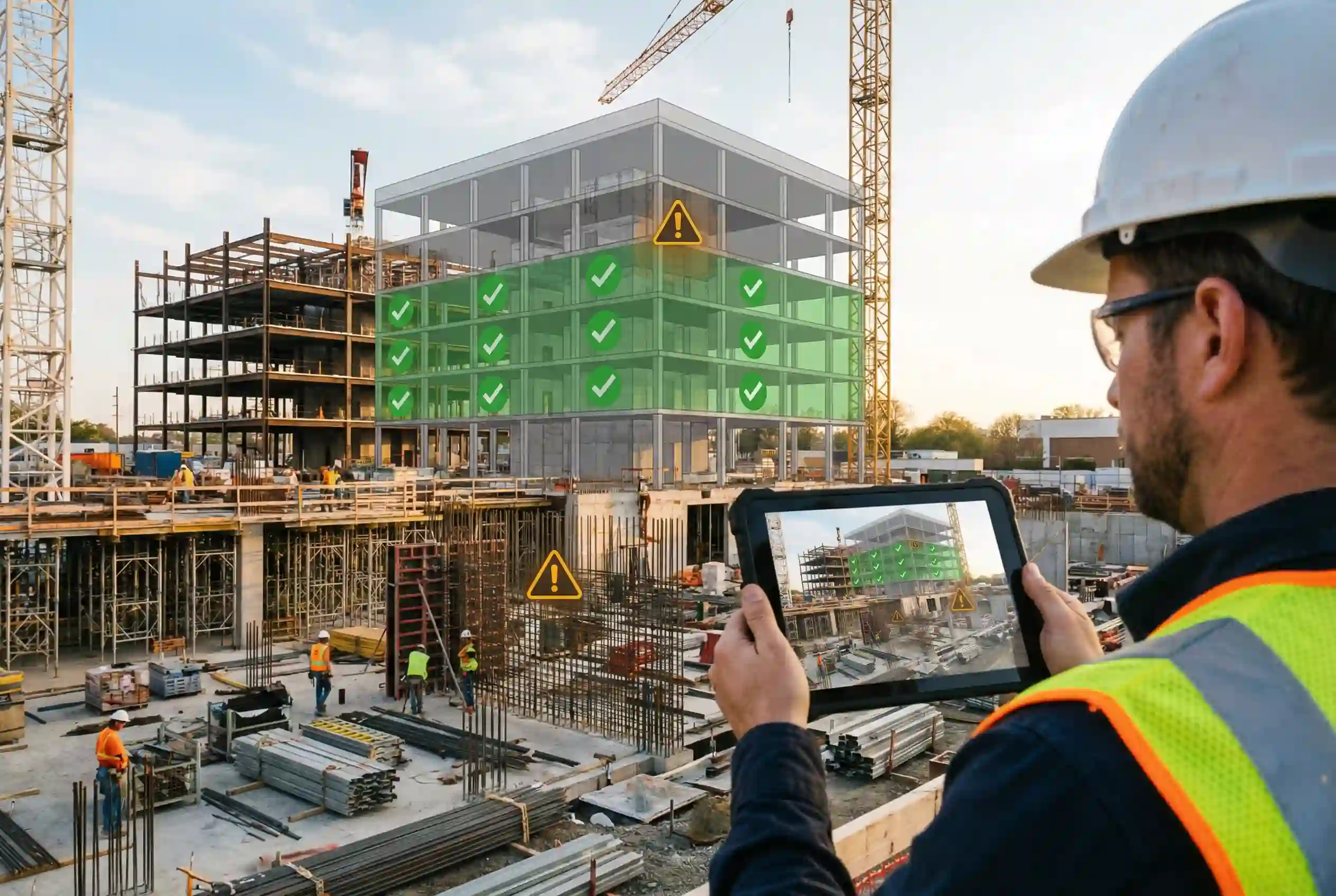
For construction SMBs, the highest-ROI entry point is almost always AI-powered clash detection combined with automated cost estimation. These two capabilities alone typically deliver 10–15% reduction in project costs within the first 90 days enough to fund the entire AI-BIM investment for the year.
05. Tech Stack
AI-BIM Technology Stack for Construction SMBs
The question is not “which BIM software should we buy?” The question is “how do these tools connect into a system that produces measurable project outcomes?” Below is the AI-BIM technology stack organized by function, not vendor category.
System Layer
Function
Example Platforms
SMB Budget
BIM Authoring
3D model creation and design
Revit, ArchiCAD, Tekla Structures
$300–$600/mo
Clash Detection
Automated conflict identification and resolution
Autodesk ACC, Solibri, Navisworks + AI plugins
$200–$500/mo
Cost Estimation
Quantity takeoff, pricing, budget analysis
Assemble, Buildee, ProEst with AI modules, Data pipelines
$150–$400/mo
Scheduling & 4D
AI-optimized sequencing and delay prediction
Synchro, ALICE Technologies, Primavera + AI
$200–$800/mo
Field Operations
Progress monitoring, quality, safety
OpenSpace, Disperse, Procore
$100–$500/mo
Digital Twins
Facility management and building operations
Platform layer
$500–$2,000/mo

Investment Insight
For a construction SMB running 3–5 concurrent projects, the Phase 1–2 AI-BIM stack costs $650–$1,500/month, roughly equivalent to 2–3 days of a senior estimator’s salary. If AI-powered clash detection prevents just one major rework event per project ($15,000–$50,000 per incident), the annual ROI exceeds 500%.
06. Pitfalls
Why Most AI-BIM Integration Fail in Construction
After working with dozens of construction firms across the US, Europe, and Southeast Asia, we have identified 4 systemic failure patterns that derail AI-BIM integration. These are not technology problems. They are organizational and process problems.
BIM Data Quality Gap
AI requires clean, consistent, properly classified BIM data. Most SMB models have inconsistent naming, mixed LOD levels, missing parameters, and outdated libraries. AI trained on poor data produces poor results.
Impact
Inaccurate clash detection, unreliable cost estimates, false positive alerts that erode team trust
Fix
Invest 4–6 weeks in BIM data cleanup before deploying AI tools. Establish LOD 300 minimum standards, standardize naming conventions, and audit model quality quarterly.
Workflow Resistance
Experienced project managers and estimators resist AI tools that challenge their judgment. ‘I’ve been doing this for 20 years’ is the most common objection. Without team buy-in, AI tools sit unused.
Impact
Low adoption rates, parallel manual processes, wasted tool subscriptions
Fix
Start with AI as a 'second opinion' tool, not a replacement. Show experienced staff how AI catches issues they would have caught but faster. Let early adopters demonstrate value to skeptics.
Siloed Implementation
AI-BIM tools deployed within one department (design, estimation, or field) without connecting to the broader project workflow. Clash detection finds issues, but resolutions are not tracked. Cost estimates are generated, but not linked to scheduling.
Impact
Fragmented insights, no closed-loop feedback, duplicated effort across teams
Fix
Map the full project workflow before selecting tools. Ensure AI outputs from one phase feed directly into the next: clash resolutions update the cost model, schedule changes trigger re-estimation.
Vendor Lock-in Without Strategy
Firms adopt a single vendor’s AI-BIM ecosystem without evaluating interoperability. When project requirements change or better tools emerge, switching costs are prohibitive.
Impact
Inflexible technology stack, inability to adopt best-of-breed tools, escalating licensing costs
Fix
Prioritize IFC (Industry Foundation Classes) and openBIM standards. Choose tools that export to open formats. Build your AI-BIM strategy around data standards, not vendor ecosystems.
07. KPIs & ROI
AI-BIM ROI Benchmarks for Construction SMBs
Every AI-BIM investment must connect to measurable project outcomes. Below are the KPI benchmarks we track across our construction clients, organized by maturity phase.
KPI Category
Metric
Baseline (No AI)
With AI-BIM
Clash Detection
Undetected clashes reaching field
15–25 per project
1–3 per project
Cost Estimation
Estimation accuracy
±15–25%
±5–10%
Estimation Speed
Time per quantity takeoff
2–3 days
2–4 hours
RFI Volume
RFIs per $1M project value
8–15 RFIs
3–6 RFIs
Schedule Accuracy
Completion date variance
±20–40 days
±5–10 days
Rework Cost
Rework as % of project cost
5–12%
2–4%
Safety
Recordable incident rate
Industry average
30–50% below average
Facility Ops
Annual maintenance cost
$8–15/sq ft
$5–10/sq ft
ROI Calculation
For a construction SMB running $5M–$20M in annual project volume, the typical AI-BIM investment of $1,000–$2,000/month delivers $150,000–$600,000 in annual savings through reduced rework, faster estimation, fewer RFIs, and improved schedule accuracy. The payback period is typically 2–4 months.
08. Roadmap
4-Phase Implementation Roadmap for AI-BIM Integration
Based on the Redex BIM Intelligence Maturity Model, this roadmap provides a structured path from BIM data readiness to autonomous building operations. Each phase delivers standalone ROI while building the foundation for the next.
Phase 1: Foundation
Establishing BIM standards and data readiness
- Month 1-2
- $5,000–$15,000 setup + $200–$500/mo tools
- Audit existing BIM maturity: model quality, LOD standards, file management
- Establish BIM Execution Plan (BEP) with AI integration requirements
- Clean and standardize existing BIM libraries and templates
- Deploy cloud-based BIM collaboration platform (BIM 360, Trimble Connect)
Target Outcome
BIM models AI-ready within 60 days
Key KPIs
Model quality score, data completeness rate, team adoption rate
Phase 2: Automation
Deploying AI for clash detection and cost estimation
- Month 3-4
- $500–$2,000/mo in AI tools
- Implement AI-powered clash detection (Autodesk Construction Cloud, Solibri)
- Deploy automated quantity takeoff and cost estimation from BIM models
- Connect BIM data to project management and scheduling tools
- Train project teams on AI-assisted BIM workflows
Target Outcome
30% reduction in RFIs and rework
Key KPIs
Clash detection rate, estimation accuracy, RFI volume reduction
Phase 3: Intelligence
Predictive analytics and 4D/5D BIM integration
- Month 5-8
- $1,000–$5,000/mo in tools + integration
- Deploy predictive scheduling with weather and supply chain risk modeling
- Implement 5D BIM with real-time cost tracking and change order impact analysis
- Build AI-powered progress monitoring using drone surveys and IoT data
- Establish measurement framework with project performance dashboards
Target Outcome
15% improvement in project delivery predictability
Key KPIs
Schedule variance, cost variance, earned value metrics
Phase 4: Autonomy
Digital twins and autonomous building operations
- Month 9-12+
- $2,000–$10,000/mo depending on building complexity
- Deploy digital twin platform connected to building management systems
- Implement predictive maintenance scheduling from BIM asset data
- Build energy optimization engine with real-time sensor integration
- Establish lifecycle cost forecasting and capital planning models
Target Outcome
25% reduction in facility operating costs
Key KPIs
Maintenance cost reduction, energy savings, space utilization rate
For a broader AI implementation framework that covers organizational readiness beyond BIM, see our AI roadmap for SMBs guide.
09. Industry Uses
AI-BIM Integration Strategies for Different Construction Segments
AI-BIM integration applications vary significantly by construction segment. A commercial general contractor has different priorities than a specialty MEP subcontractor or a residential developer. Below are the segment-specific applications that deliver the highest ROI.
General Contractors
- AI clash detection across all subcontractor BIM models before coordination meetings
- Automated schedule optimization with trade stacking and sequencing analysis
- Predictive cost tracking: real-time budget variance against BIM-based estimates
- AI-powered bid analysis: compare subcontractor proposals against BIM quantities
- Progress monitoring: drone-captured site data compared to 4D BIM baseline
MEP Subcontractors
- AI-optimized routing for HVAC, plumbing, and electrical systems within BIM
- Automated prefabrication drawings generated from BIM model geometry
- Material quantity optimization: AI minimizes waste through cut-list optimization
- Clash resolution prioritization: AI ranks conflicts by cost impact and schedule risk
- As-built documentation: AI compares installed conditions to BIM design intent
Case in Point
A mid-sized MEP subcontractor ($15M annual revenue, 85 employees) implemented AI-powered clash detection and automated prefabrication drawing generation from their BIM models. Within 6 months, they reduced field rework by 28%, cut prefabrication waste by 15%, and decreased RFI response time from 5 days to 1 day. The $1,200/month tool investment generated an estimated $340,000 in annual savings across their project portfolio.
10. The RedEx Perspective
Leading the Shift Toward AI-BIM Integration
Most construction firms treat BIM as a design tool and AI as a separate technology initiative. The firms that achieve transformational results treat them as a single integrated system where BIM provides the data layer and AI provides the intelligence layer.
At Redex Consulting, we help construction SMBs move from static BIM models to intelligent construction systems through 3 principles:
01
Data Quality Before AI Deployment
We audit your BIM maturity first: model quality, LOD standards, naming conventions, and data completeness. AI deployed on poor BIM data produces poor results. The Redex BIM Intelligence Maturity Model ensures your foundation is solid before investing in advanced capabilities.
02
Workflow Integration, Not Just AI-BIM Integration Tool Procurement
We design the full project workflow from design through construction to facility operations and then select AI-BIM tools that fit. Every AI output must flow into a downstream action: clash resolutions update cost models, schedule changes trigger re-estimation, progress data feeds earned value analysis.
03
Measurable 90-Day Milestones
Every AI-BIM initiative starts with a clear 90-day goal: 'Reduce undetected clashes by 80%' or 'Cut estimation time by 60%.' If we cannot measure it, we do not recommend it. Phase 1–2 capabilities typically pay for the entire annual investment within the first quarter.
Ready to transform your BIM investment into a competitive advantage? Explore our AI strategy consulting services to start with a BIM Intelligence Maturity Assessment.
Transform Your BIM Investment
Stop Using BIM as a Drawing Tool. Start Building Intelligence.
Most construction firms capture less than 10% of BIM’s potential value. AI integration unlocks the remaining 90%.
Redex helps construction SMBs assess BIM maturity, deploy AI-powered workflows, and build intelligent construction systems that reduce costs, compress schedules, and win more bids.
Key Takeaways
- Construction productivity grew only 10% in 20 years while manufacturing grew 90%. AI-BIM integration is the highest-leverage opportunity to close this gap.
- The Redex BIM Intelligence Maturity Model structures the journey across 4 phases: Foundation, Automation, Intelligence, and Autonomy.
- AI-powered clash detection and automated cost estimation are the highest-ROI entry points delivering 10–15% cost reduction within 90 days.
- The Phase 1–2 AI-BIM stack costs $650–$1,500/month roughly 2–3 days of a senior estimator's salary. Annual ROI typically exceeds 500%.
- 4 failure patterns derail AI-BIM initiatives: BIM data quality gaps, workflow resistance, siloed implementation, and vendor lock-in.
- Different construction segments require different AI-BIM priorities: GCs focus on coordination, MEP subs on prefabrication, owners on digital twins.
- Every AI-BIM investment must connect to measurable KPIs: clash detection rate, estimation accuracy, RFI volume, schedule variance, and rework cost.
- The global BIM market is projected to reach $15B by 2030. AI integration is the primary growth driver.
Frequently Asked Questions
What is AI-BIM integration and why does it matter for construction SMBs?
AI-BIM integration combines Building Information Modeling (the structured 3D digital representation of a building) with artificial intelligence (pattern recognition, prediction, and optimization algorithms). For construction SMBs, this means transforming static digital models into intelligent systems that automatically detect design conflicts, estimate costs, predict schedule delays, and optimize building performance. The global BIM market is projected to reach $15 billion by 2030, with AI integration as the primary growth driver. SMBs that adopt AI-BIM early gain a significant competitive advantage in bid accuracy, project delivery, and client satisfaction.
How much does AI-BIM integration cost for a mid-sized construction firm?
The investment varies by maturity phase. Phase 1 (Foundation) requires $5,000-$15,000 in setup plus $200-$500/month for cloud BIM collaboration tools. Phase 2 (Automation) adds $500-$2,000/month for AI clash detection and cost estimation tools. For a firm running 3-5 concurrent projects, the Phase 1-2 stack costs $650-$1,500/month total. If AI-powered clash detection prevents just one major rework event per project ($15,000-$50,000 per incident), the annual ROI exceeds 500%. The payback period is typically 2-4 months.
What BIM maturity level do we need before implementing AI?
At minimum, your BIM models should meet LOD 300 standards with consistent naming conventions, proper classification systems (UniFormat or MasterFormat), and cloud-based model management. The Redex BIM Intelligence Maturity Model starts with a Phase 1 (Foundation) assessment that evaluates your current model quality, data completeness, and team readiness. Most SMBs need 4-8 weeks of BIM data cleanup before AI tools can deliver reliable results. Skipping this step is the #1 reason AI-BIM implementations underperform.
Which AI-BIM use case should we start with?
For most construction SMBs, the highest-ROI entry point is AI-powered clash detection combined with automated cost estimation. These two capabilities alone typically deliver 10-15% reduction in project costs within the first 90 days. Clash detection prevents expensive field rework ($15,000-$50,000 per major incident), while automated estimation reduces takeoff time by 80% and improves accuracy by 15-25%. Once these are established, move to predictive scheduling (Phase 3) and digital twins (Phase 4).
Does AI-BIM replace experienced project managers and estimators?
No. AI-BIM amplifies experienced professionals, it does not replace them. AI handles the high-volume analytical work (scanning thousands of model elements for clashes, extracting quantities from complex geometry, processing weather and supply chain data for schedule optimization) while humans handle strategic decisions, client relationships, and quality judgment. An experienced estimator using AI-BIM tools can produce the output of a 3-person team with higher accuracy. The goal is to make your best people more productive, not to eliminate their roles.